How to Use Contemporary Art in a Traditional Interior
I love contemporary art in a traditional room. A traditional interior can feel almost timeless. It could have been designed and lived in at any point since that particular version of “traditional” took hold. Contemporary art changes that. It adds a spark and gives the person who lives there now a chance to put their stamp on it.
The goal isn't to make contemporary art match a traditional room. It's to make it look like you meant to put it there.
Contemporary Art Makes a Traditional Room Personal
One of the things I like about traditional interiors is that so many of the elements have a history. The architecture, antiques, furniture and materials all connect the room to what came before.
Contemporary art brings the current owner into it.
A bold painting or unexpected piece of art keeps the room from feeling like it belongs to another time. The traditional parts can still be traditional. The art is the part that says someone lives here now.
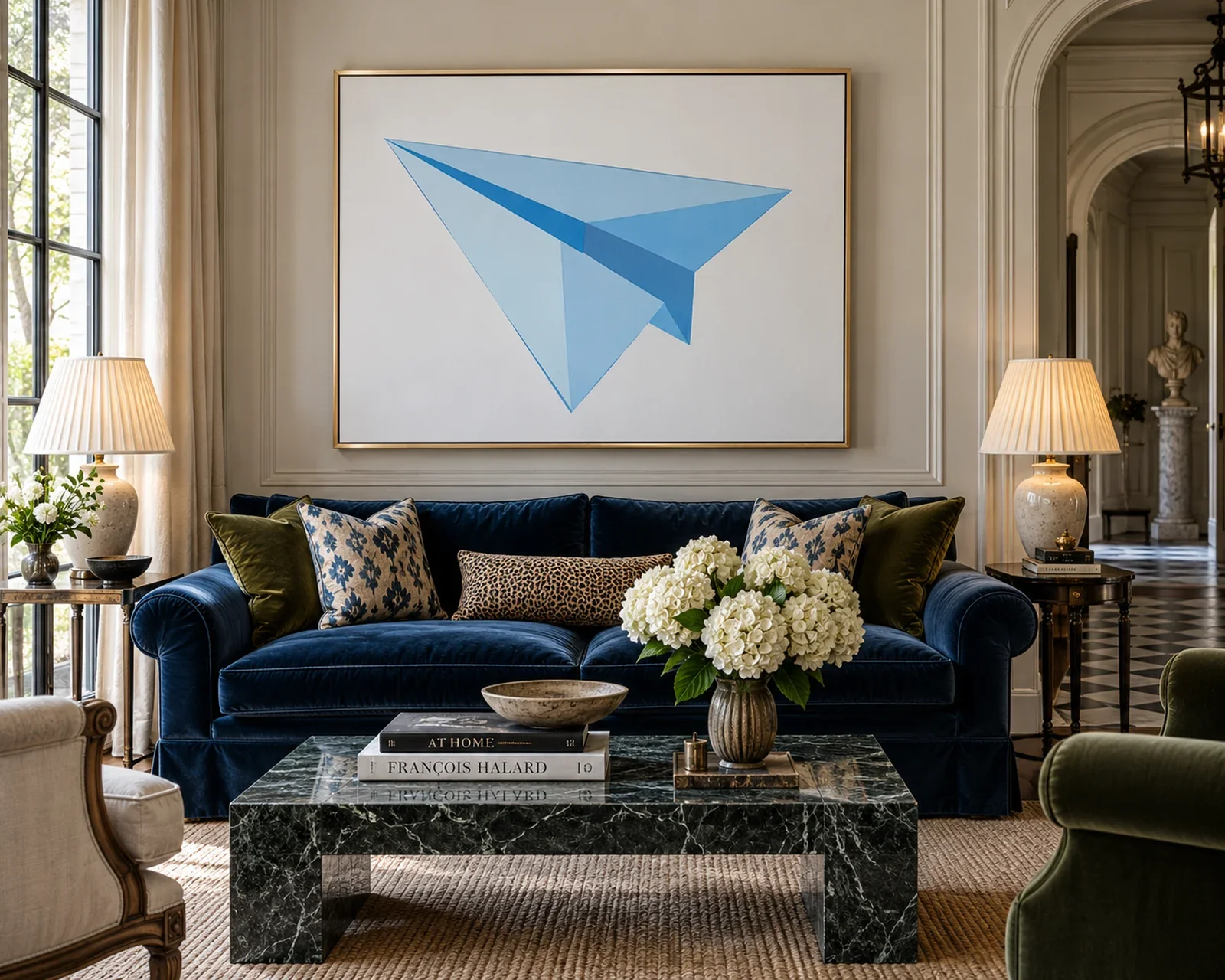
Contemporary art can give a traditional room a sense of who lives there now.
I don't think the art needs to imitate anything else in the room. In fact, the contrast is usually what makes it interesting.
Don't Match the Art to the Room, But Don't Ignore the Room Either
There's nothing wrong with taking the room into account when choosing art.
You sometimes hear that you should just choose what you love and everything will somehow work together. Maybe, but in a traditional room a lot of the design decisions have already been made. Pretending the vibe of the room doesn't matter makes about as much sense to me as trying to match everything perfectly.
The connection can be color, scale, subject, mood, or just a contrast that feels right. The art doesn't need to coordinate with the sofa and curtains. It just needs to look like you chose it knowing what room it was going into.
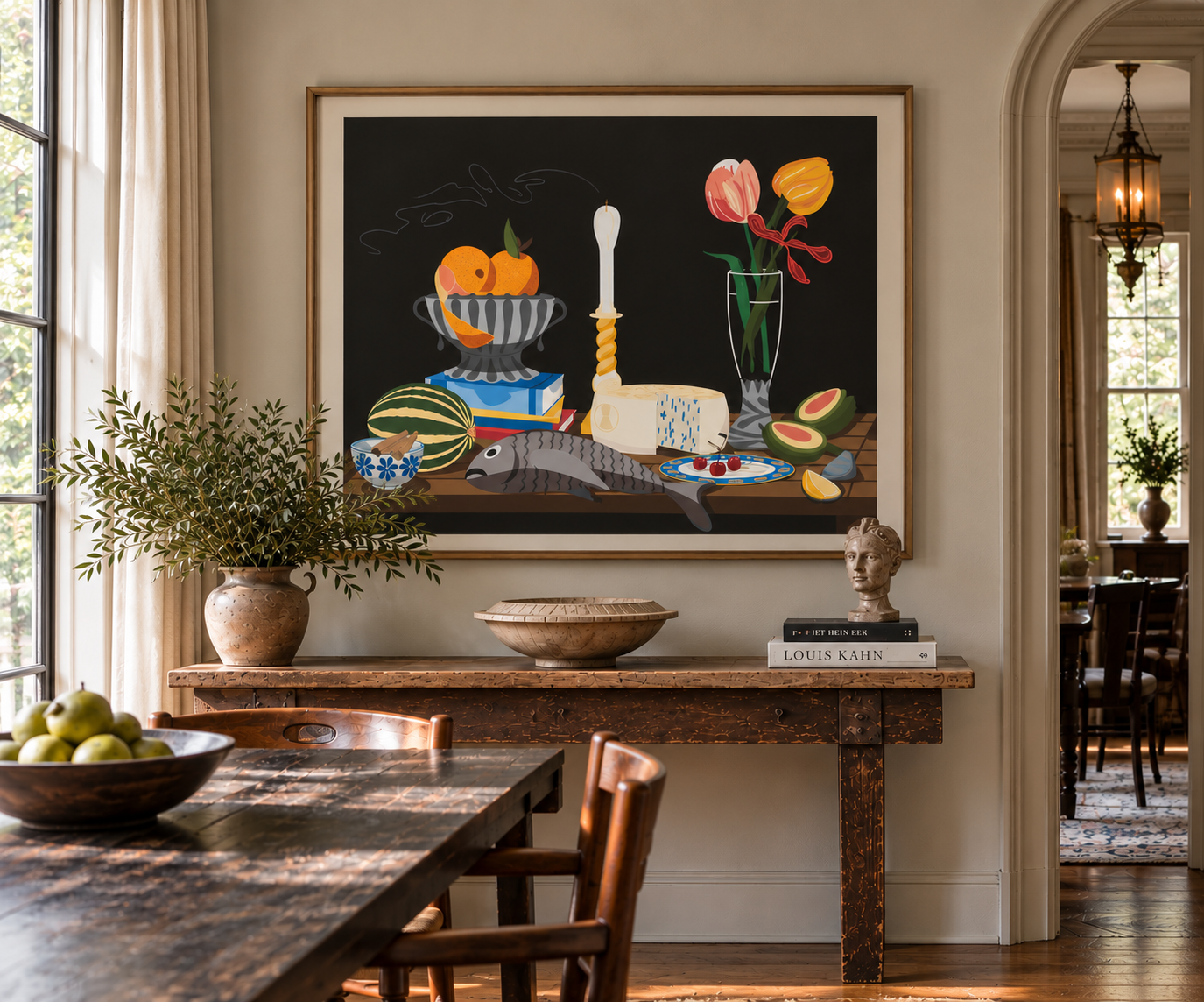
A large contemporary still life doesn't match this traditional room, but it belongs there.
Presentation Matters More Than You Think
Contemporary art in a white-box gallery can get away with a pretty unpolished presentation because the blank space around it does a lot of the work. The gallery itself is telling you that whatever is on that wall is art.
You don't have that luxury in a traditional interior.
This is where framing, mounting, lighting and placement become important. They tell you that the object you're looking at is there intentionally.
You can hang a skateboard on the wall and call it art. I have no problem with that. But put that skateboard in a traditional room and the way you display it becomes really important. You have to tell the person looking at it, “Yes, this is art. It's supposed to be here.”
Let Contemporary Art Look Contemporary
I generally lean toward a contemporary frame for contemporary art, even in a very traditional room.
There's already contrast between the art and the room. I don't think you necessarily need to create another contrast between the art and its frame.
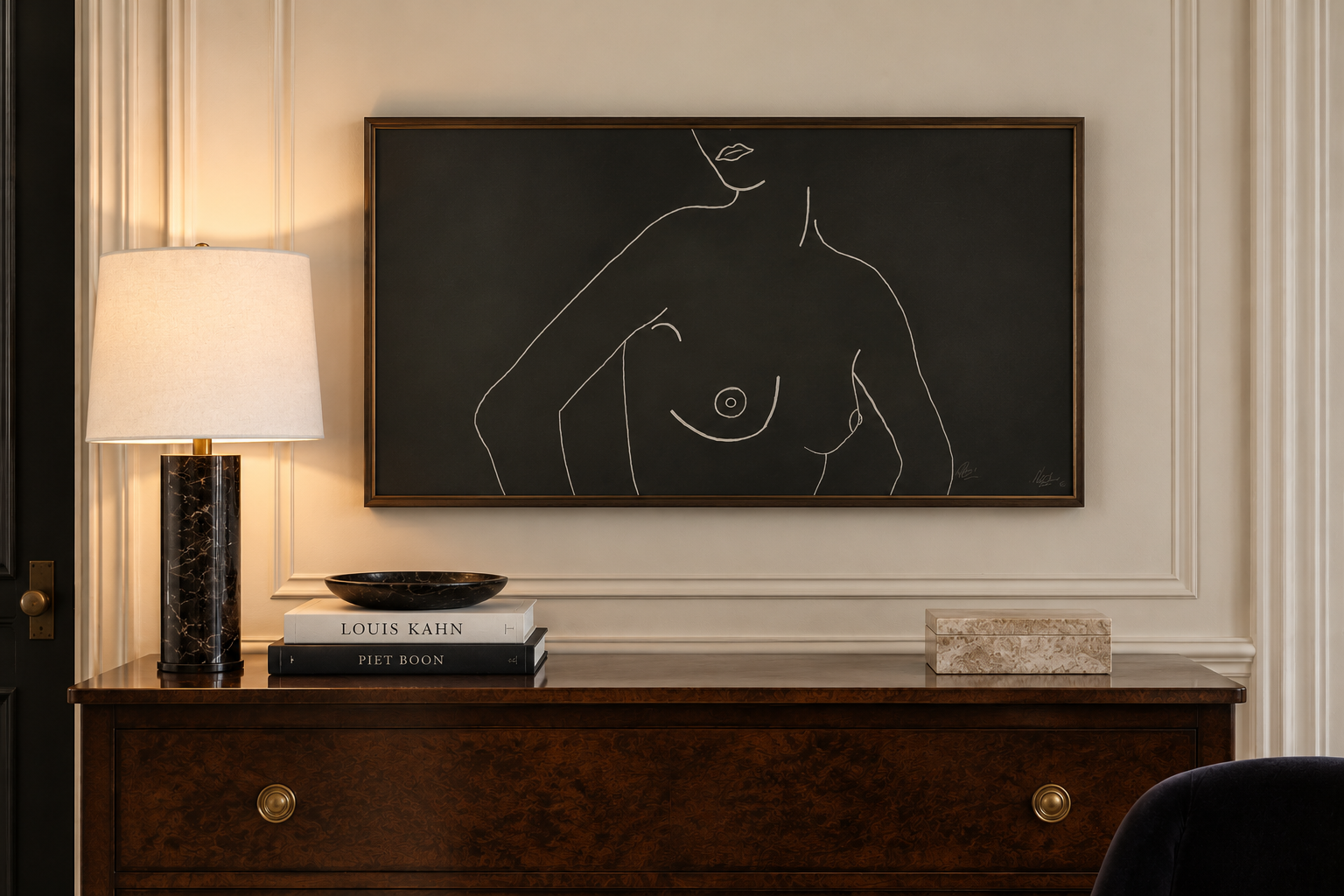
A simple contemporary frame lets the artwork stay contemporary, even in a traditional setting.
Could you put a splatter painting in an elaborate gilt frame? Sure. That's probably too much contrast for me, but you live your life.
The important thing is that the framing looks deliberate. It should help the artwork feel finished and properly presented without trying to turn contemporary art into something traditional.
The Rules of Scale Haven't Changed
People can get a little too caught up in molding and architectural details when they're deciding what size artwork to use in a traditional room.
My advice is pretty simple: pretend the molding isn't there.
The same rules of scale apply that would apply in any other room. Look at the wall, the furniture below it and the room as a whole. Then choose the size of the art that makes sense.
The molding might affect exactly where you can hang it, but it doesn't make a piece that's too small suddenly the right size.
Mixing Contemporary Art With Traditional Interiors
You don't need to make contemporary art look traditional for it to work in a traditional room. You also don't need to go looking for the most extreme contrast you can find.
Pay attention to the room, choose art you actually want to live with, get the scale right and make the presentation look intentional.
A traditional room can tell you a lot about where it came from. Contemporary art tells you something about who lives there now.